

Next-Gen Global Ocular
Next-Gen Global Ocular: Beyond Traditional Surgery: How South Korean 3D-Bioprinting and Regenerative Therapeutics Are Solving Global Corneal Blindness Next-Gen Global Ocular: For decades, millions of
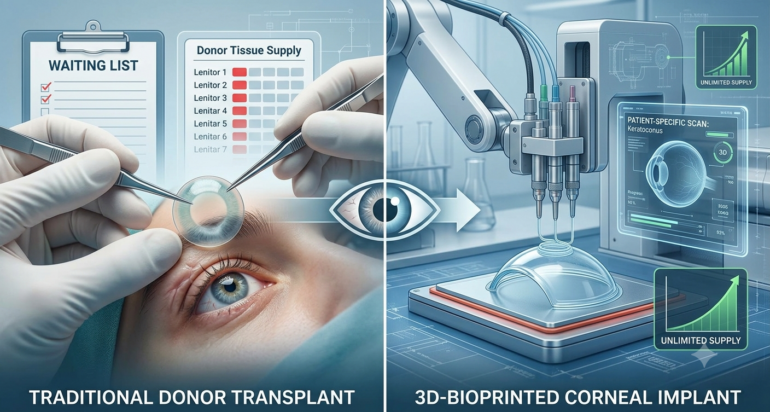
3D Bioprinted Cornea Transplants: Millions of people worldwide suffer from corneal blindness, a condition that severely impairs vision due to damage, scarring, or disease of the clear outer layer of the eye. For decades, the only viable solution has been a traditional keratoplasty (corneal transplant surgery) using a human donor cornea. However, the medical community faces a severe obstacle: a critical shortage of available human tissue. Statistically, only one donor cornea is available for every seventy patients on global waiting lists. This profound supply gap leaves countless individuals in prolonged darkness.
Fortunately, groundbreaking advancements in biomedical engineering have introduced a revolutionary alternative. The development of the 3D-bioprinted corneal implant marks a paradigm shift in regenerative ophthalmology. By utilizing advanced engineering and cellular biology, medical researchers can now fabricate functional, transparent eye tissue in a laboratory setting. This technology promises to eliminate dependency on human organ donors entirely, offering a scalable, highly precise solution to global corneal blindness.
A 3D-bioprinted corneal implant is an engineered ocular structure created layer-by-layer using a highly specialized 3D bioprinter. Unlike traditional synthetic prosthetics, these advanced implants utilize biological materials designed to mimic the natural cellular architecture of the human eye.
The manufacturing process begins with a precise digital scan of the patient’s ocular anatomy. Using computer-aided design software, engineers map the exact thickness, diameter, and curvature required for the patient’s vision correction. The bioprinter then dispenses an optimized bioink (a printable material containing living cells and structural proteins) through a microscopic nozzle. This material is meticulously deposited onto a clear substrate to construct the precise multi-layered architecture of a natural cornea.
The secret to the success of this biofabrication process lies in the composition of the bioink. It typically combines high-purity human type I collagen, which provides structural rigidity and transparency, with specialized human corneal keratocytes or stem cells. Once printed, these cells proliferate and organize themselves, transforming the printed matrix into living, functional tissue that integrates seamlessly with the host eye.
To understand the clinical significance of this technological leap, it is essential to compare the physical and logistical attributes of 3D-bioprinted implants against traditional human donor tissue.
| Feature | Traditional Donor Transplant | 3D-Bioprinted Corneal Implant |
| Material Origin | Human cadaveric donor tissue | Engineered human collagen and bioink |
| Global Availability | Severe shortage; highly unpredictable supply | Unlimited on-demand manufacturing potential |
| Structural Precision | Variable thickness; shaped manually by surgeons | Micron-level accuracy tailored to patient scans |
| Immunological Risk | High risk of host rejection; requires steroid drops | Minimal risk due to highly biocompatible collagen |
| Surgical Processing | Requires delicate manual harvesting from eye banks | Preloaded into sterile injectors for rapid delivery |
Traditional transplants are inherently limited by the biological traits of the donor. Human tissue can vary in cellular density, shape, and health, forcing corneal surgeons to adapt their surgical techniques during every live operation. Conversely, a bioprinted implant delivers absolute consistency. Every single graft features identical, predictable structural properties, minimizing human error and standardizing surgical outcomes across clinics worldwide.
The primary logistical advantage of biofabricated implants is their scalability. In a traditional system, one human donor can only restore sight to two individuals. In a modern laboratory environment, scientists can extract a small tissue sample from a single healthy donor cornea and multiply those cells exponentially through cell culture techniques.
This single sample provides enough cellular material to formulate thousands of batches of specialized bioink. Consequently, one donor can indirectly fuel the manufacturing of hundreds of clear, custom-shaped corneal implants. This exponential scalability represents a definitive solution to the global tissue shortage, promising to drastically shorten medical waitlists in developing nations where eye banking infrastructure is fundamentally lacking.
Furthermore, traditional donor tissue has a incredibly short shelf life, often requiring utilization within fourteen days of harvesting. Bioprinted structural scaffolds can be manufactured, cross-linked for stability, and safely stored or transported globally without the rapid cellular degradation associated with human cadaveric tissue.
As we progress through 2026, cell-based 3D-bioprinted corneas have advanced from theoretical laboratory concepts into active human clinical trials. Early clinical data from pioneering cohorts demonstrates exceptional safety profiles, showing zero instances of adverse immunological rejection. Because the structural matrix consists of highly purified collagen, the recipient’s body recognizes the implant as natural tissue rather than a foreign object, allowing host cells to gradually migrate into the implant and naturally regenerate the ocular surface.
Currently, this technology targets patients suffering from advanced keratoconus (thinning and cone-like bulging of the cornea), deep corneal scarring from chemical or mechanical trauma, and genetic corneal dystrophies. As clinical validation continues to expand globally, biofabricated corneas are positioned to become the primary intervention for structural vision restoration.
The comparison between 3D-bioprinted corneal implants and traditional transplants highlights a clear trajectory toward automated, personalized, and limitless regenerative medicine. By replacing an unpredictable human donor chain with precision biofabrication, the medical field can standardize patient outcomes and eradicate corneal blindness on a global scale.
For ophthalmic clinics, surgical centers, and healthcare distributors looking to stay at the absolute forefront of advanced vision care, monitoring these regenerative milestones is essential. Explore our advanced solutions in 3D-bioprinted ocular implants, specialized prosthetics, and regenerative therapeutics by visiting our main portfolio at BioCornea Tech Global today. check out our ophthalmic-product-portfolio HERE

Lorem ipsum dolor sit amet consectetur adipiscing elit dolor
Next-Gen Global Ocular: Beyond Traditional Surgery: How South Korean 3D-Bioprinting and Regenerative Therapeutics Are Solving Global Corneal Blindness Next-Gen Global Ocular: For decades, millions of
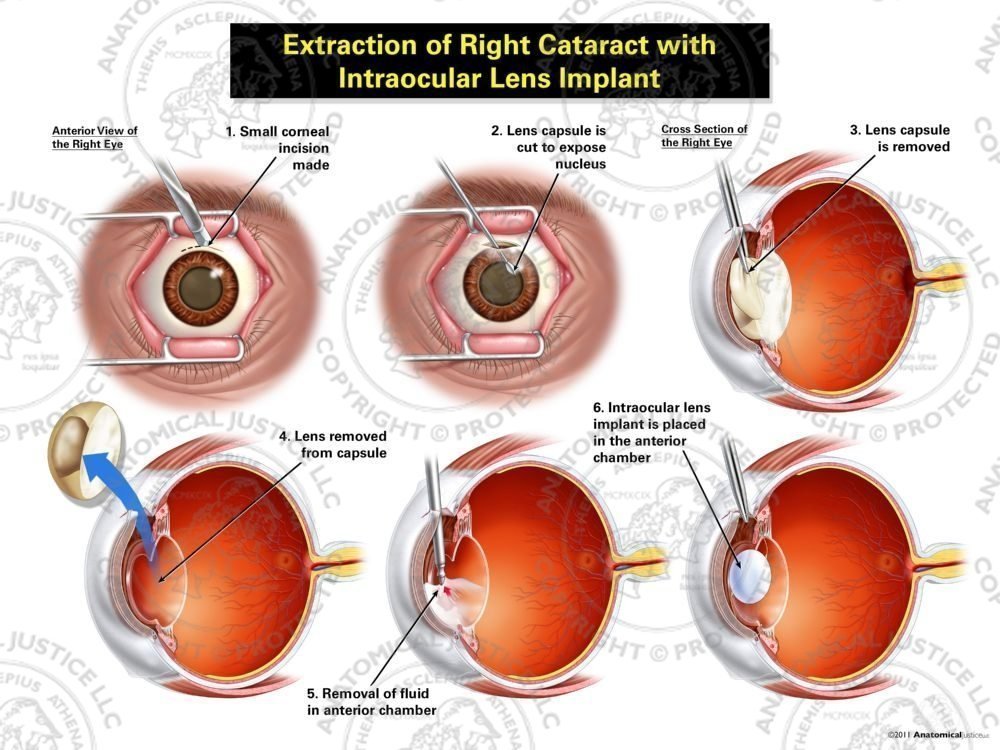
Next-Generation Intraocular Lens Innovations: Restoring Clarity to Millions Worldwide Next-Generation Intraocular Lens Innovations: Cataracts remain one of the leading causes of vision impairment globally, affecting
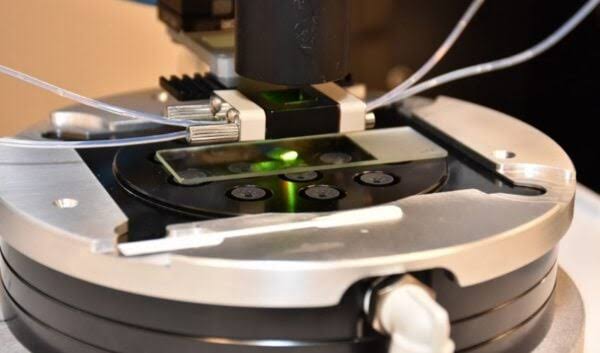
Advanced Bioengineered Ocular Implants: Redefining Vision Restoration: The Future of Global Ophthalmic Bio-Therapeutics Advanced Bioengineered Ocular Implants: The global landscape of ophthalmology is undergoing a

BioCornea Tech Global is a South Korean specialist curing blindness worldwide through advanced, life-changing, and innovative 3D-printed biosynthetic cornea technologies.
E-mail: info@biocorneatech.com
Address:222 Banpo-daero, Seocho District, Seoul, South Korea
Phone:+82-2-555-0199
Opening Hours: Mo-Fr: 07:00_23:00h
Address:
222 Banpo-daero, Seocho District, Seoul, South Korea
Phone:+82-2-555-0199
Opening Hours:
Mo-Fr: 07:00-23:00h
All rights reserved.